Find any Amazon.com product's deals and best prices with our free Amazon deal finder and price tracker. Simply paste the product link (URL) or search by name in the box above. You'll get full product information, Deal Score, and all current deals. Shop smarter with the best Amazon deals finder in the USA.
x
Sorry, Something went wrong!
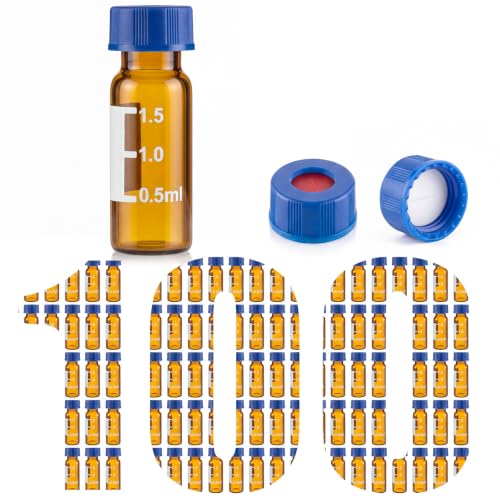
LemonRoad 100 Pcs 2 ml Autosampler Vials 9-425 GC/HPLC Amber Sample Vials with Screw Cap Write-on Spot & Graduations & PTFE & Silicone Septa for LC Stamper GC-MS Lab Analysis
✅ In stock
F
Grade
⚠️ Price may have changed. Last updated 24+ hours ago — confirm on Amazon.
Check Deal at Amazon
Price verified Sep 21, 2026 5:51 AM · Prices & availability subject to change
Is This a Good Price on Amazon?
💤 Not a Deal- 💤Verdict: Not a Deal. Price is at or above historical norms. Best to wait for a sale.
- ➡️Pricing has held fairly steady, with no strong push in either direction.
How We Scored This Deal
Price Competitiveness
0/28
Recent Value
0/22
Market Standing
0/20
Deal Strength
0/20
Momentum
0/10
📝 Product Overview
🏪 Sold by
LemonRoad
📦 Fulfillment
Fulfilled by Amazon
🚚 Shipping
Free Shipping
Product Details
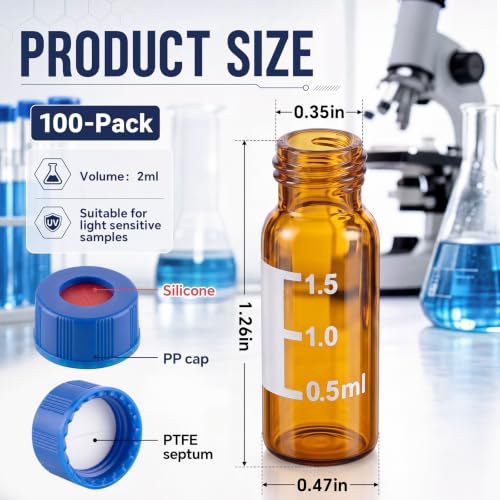
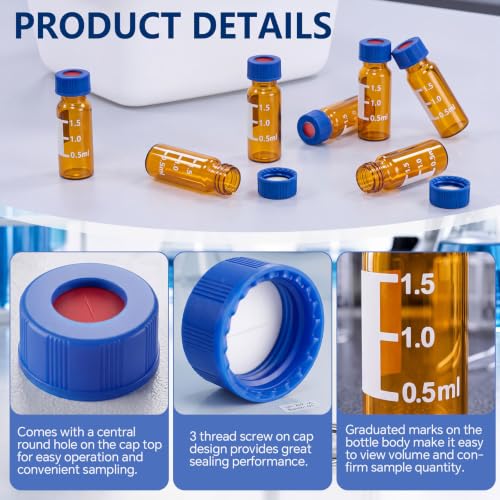
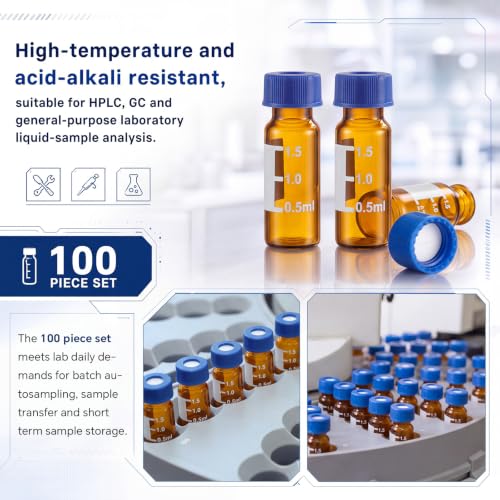
✓Value Pack for High-throughput Labs: each package contains 100 autosampler vials, each comprising an amber vial, a blue cap, and pre‑fitted septum, with a 2 mL nominal volume and dimensions of 1.26"/32 mm (height) × 0.47"/12 mm (base diameter) and 0.35"/9 mm cap; This quantity supports extended operation in teaching labs or routine quality control stations, reducing interruptions for restocking
✓Secure Closure System: 9-425 gc/hplc amber sample vials included blue screw caps incorporate white PTFE and red silicone septa, offering a balance of chemical resistance and resealability; The cap's threads engage smoothly to create consistent torque for automated handling; This design minimizes solvent evaporation and limits airborne contaminants from entering the vial, which is applicable to sample storage, transfer and automatic sampling processes
✓Light-sensitive Sample Protection: these autosampler vials are molded from amber glass, which reduces UV and visible light transmission to safeguard photolabile compounds during storage and sequential runs; The translucent wall allows convenient visual checks of remaining liquid without removing the cap; This material choice supports assay integrity for dyes, vitamins, or other light‐sensitive analytes in HPLC or GC workflows
✓Integrated Marking and Graduation: each autosampler vials with graduations includes printed scale marks for quick sample estimation and a write‑on area for labeling with pens; These autosampler vials with graduations and write‑on spot aid in dilution preparation, volume verification, and direct ID marking; Both features stay legible after routine use and brief solvent contact, supporting traceability and reducing errors across multiple batches
✓Supports Routine Academic and Industrial Analysis: designed for HPLC and GC workflows, these autosampler vials with write-on spot suit both training laboratories and high‑throughput quality control settings; The ready‑to‑use format reduces preparation steps, allowing students and technicians to focus on method development or sample sequencing; Research groups can process multiple batches without frequent resupply, supporting continuous instrument operation and teaching schedules
⚙️ Specifications
7.91 x 4.06 x 2.44 inches
11.7 ounces
LemonRoad
B0H6BM4TCM
Package Dimensions
7.91 x 4.06 x 2.44 inches
Item Weight
11.7 ounces
Manufacturer
LemonRoad
ASIN
B0H6BM4TCM
Date First Available
June 22, 2026